
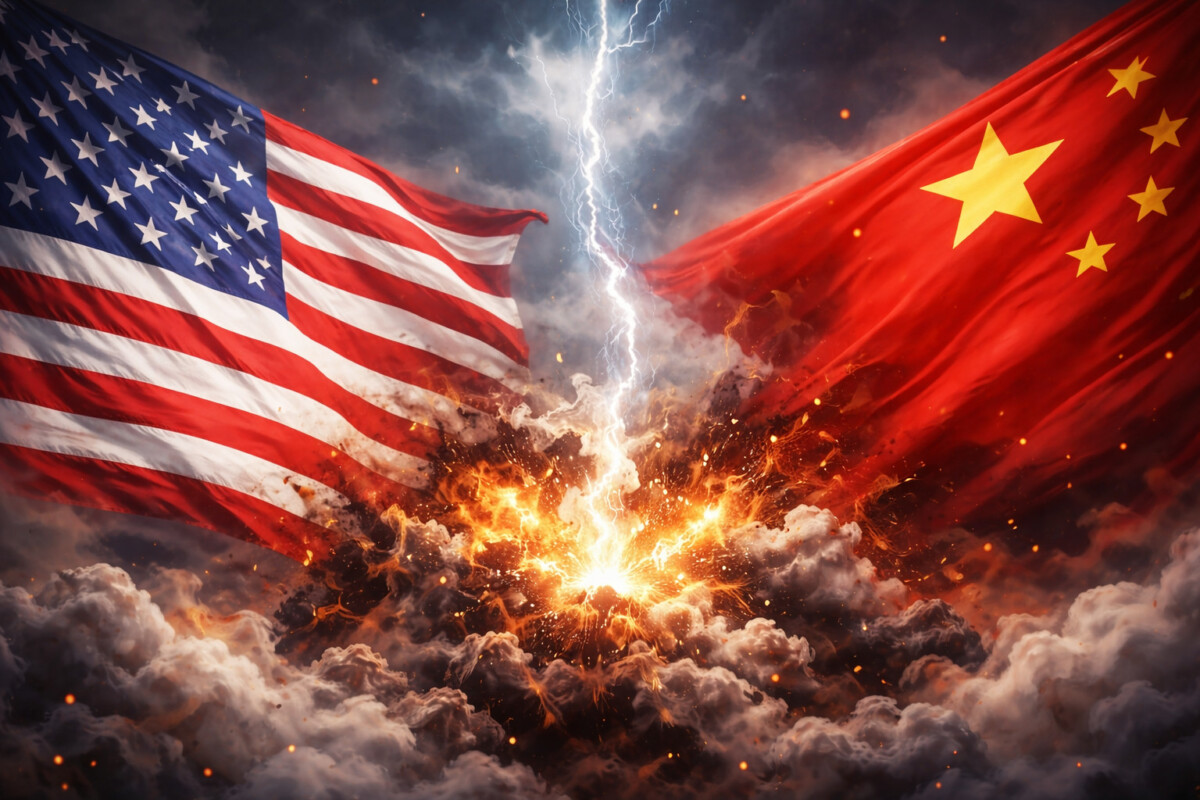
2026 How the U.S. is Neutralizing China’s Gold and Cash Reserves
The international financial landscape is currently weathering a perfect storm. In February 2026, the global market witnessed a staggering event: gold prices plummeted nearly 15%, dropping from a historic peak to the $4,800 range in a matter of days. While many viewed this as a mere “market correction,” my strategic analysis suggests a much more calculated geopolitical play at work.
This isn’t just volatility; it is the culmination of a sophisticated strategy to systematically dismantle China’s economic leverage. By neutralizing Beijing’s “war chest”—its gold and Treasury holdings—the U.S. is effectively turning China’s assets into “dead money.” Today, we will dive into the “plumbing” of this new financial order.
The Reconnaissance Phase: Mapping China’s Strategic Vulnerabilities
The groundwork for this maneuver was laid during Trump’s first term. While the media focused on soybean tariffs, U.S. economic teams were performing a high-stakes “stress test” on the Chinese economy. Through this process, the U.S. mapped three critical vulnerabilities that define China’s current predicament.
The first is the persistent “Dollar Trap”—despite aggressive “de-dollarization” rhetoric, nearly 58% of international trade settlements remain tied to the Greenback. The second is a predictable behavioral pattern: every time a crisis hits, Beijing dumps U.S. Treasuries to raise cash and hoards gold as a hedge. Finally, the U.S. realized that China’s $3 trillion foreign exchange reserve is far less flexible than it appears when accounting for currency defense and essential imports. This reconnaissance allowed the U.S. to draw a precise map of exactly where China would run when the walls started closing in.
Precision Strikes: Severing the Greenback Pipeline
With the 2025 re-election of the Trump administration, the strategy shifted from observation to execution. The primary weapon has been the U.S. Reciprocal Trade Act, which authorized unprecedented tariffs—ranging from 60% to over 100% on Chinese goods.
These tariffs are not merely about protecting domestic industry; they are designed to sever the “Dollar Pipeline.” When Chinese factories are barred from their largest consumer market, the inward flow of USD dries up. This creates a liquidity chokehold for a nation that requires dollars to import critical resources like oil, semiconductors, and food. For Beijing, a dried-up dollar supply is essentially an economic death sentence.
The Treasury Trap: Why China’s ‘Financial Nuclear Option’ Failed
Desperate for liquidity, Beijing recently reached for its “nuclear option”: dumping its massive holdings of U.S. Treasury bonds. In late 2025, China began offloading tens of billions in Treasuries, hoping to spike U.S. interest rates and trigger a Wall Street panic. However, the move backfired thanks to a brilliantly engineered “absorption system.”
The U.S. utilized the GENIUS Act (2025) to regulate the stablecoin market, mandating that issuers like Tether and USDC back their digital assets with U.S. Treasuries. As China sold, the massive crypto-stablecoin market automatically bought. Combined with coordinated purchases from Tier-1 allies like Japan and South Korea, the U.S. successfully transferred its debt from a hostile hand to friendly, regulated ones. This transformed China’s “financial bomb” into a strategic “debt-relief” opportunity for the United States.
The Weaponization of Gold: Turning Bullion into ‘Yellow Rocks’

With their dollar income cut and their Treasury leverage gone, China turned to its final bastion: Gold. Beijing has been the world’s most aggressive gold buyer for years, viewing it as the ultimate uncancelable asset. However, the February 2026 crash proved that even gold is not immune to U.S. structural power.
The U.S. Treasury, in coordination with the London Bullion Market Association (LBMA), has moved toward restricting “Good Delivery” certifications for gold originating from certain jurisdictions. If gold lacks this international standard, it becomes “illiquid”—virtually impossible to trade at spot prices on the global market. Essentially, China could be sitting on 5,000 tons of gold, but if they cannot convert it to liquid cash, it becomes nothing more than “yellow rocks.” The 15% flash crash was a psychological masterstroke, signaling that the U.S. still holds the keys to global asset valuation.
For a deeper dive into current global reserve statistics, you can visit the Official International Monetary Fund (IMF) Data Portal.
While We Talk Price, the Giants Change the Game
Retail investors often get caught up in “buying the dip” or analyzing price charts. However, at the geopolitical level, the game is about Systemic Sovereignty. The U.S. has achieved the unthinkable: rendering China’s massive reserves virtually useless for offensive purposes. China is like an explorer in the desert with a gallon of water, but the cap has been welded shut—the asset exists, but it cannot be consumed.
The takeaway for global investors is clear: do not just look at the price of gold or the yield of a bond. Look at the “plumbing” of the global financial system. We are entering a new era where liquidity is the only true currency, and the U.S. currently holds the keys to the world’s vault. Staying ahead requires understanding the board, not just the pieces.
As we monitor these tectonic shifts in sovereign assets, it is crucial to stay informed through objective data. I highly recommend tracking global reserve trends via the IMF Data – International Monetary Fund, which serves as the primary source for understanding how central banks across the world are repositioning their holdings in this volatile era.
If you have any questions or would like to share your thoughts on the geopolitical shift, please feel free to reach out to me via the [Contact] page.
Read More on Economy & Trends: