
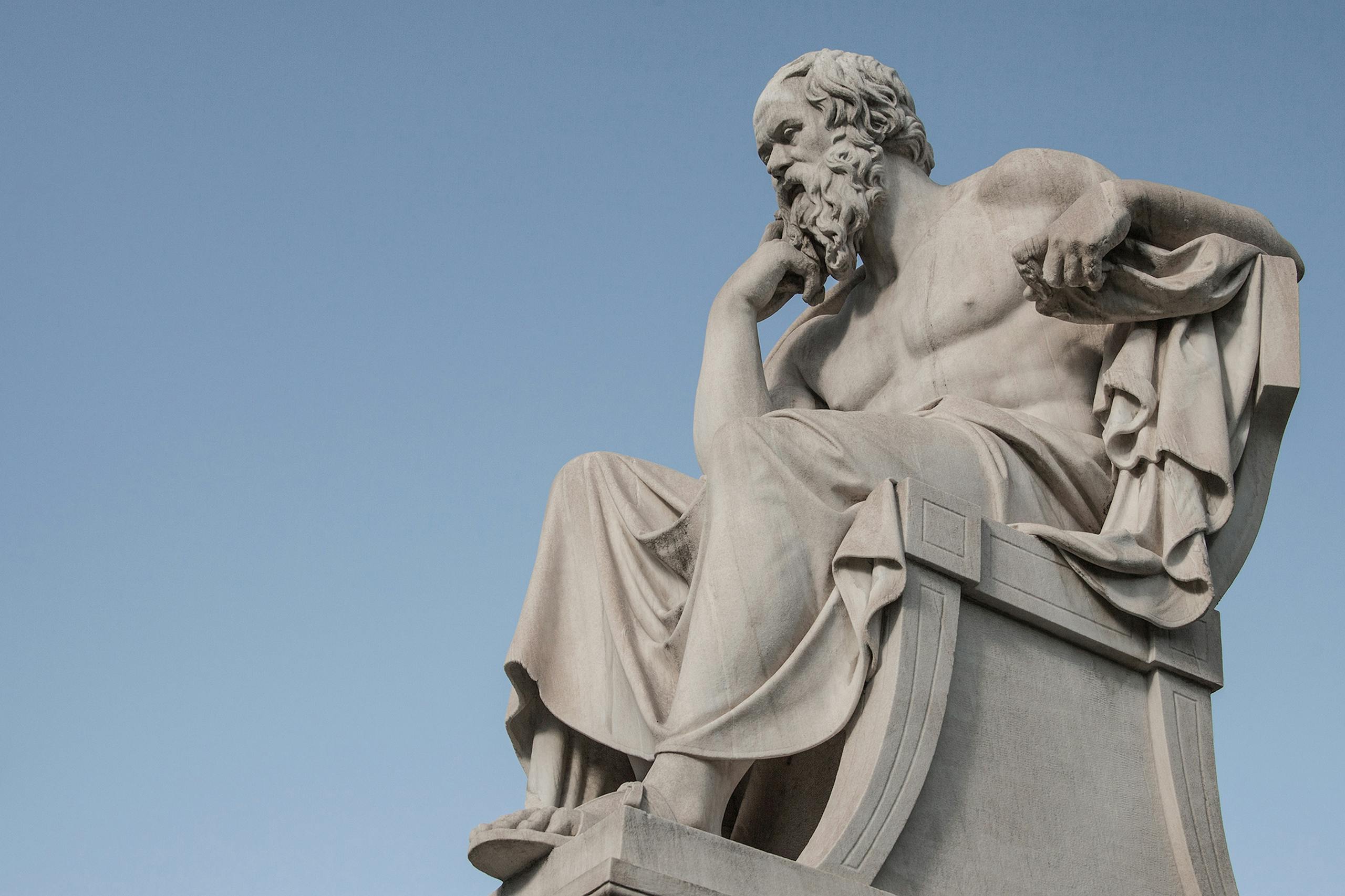
The Death of Socrates: The Limits of Democracy and the Dawn of Western Philosophy
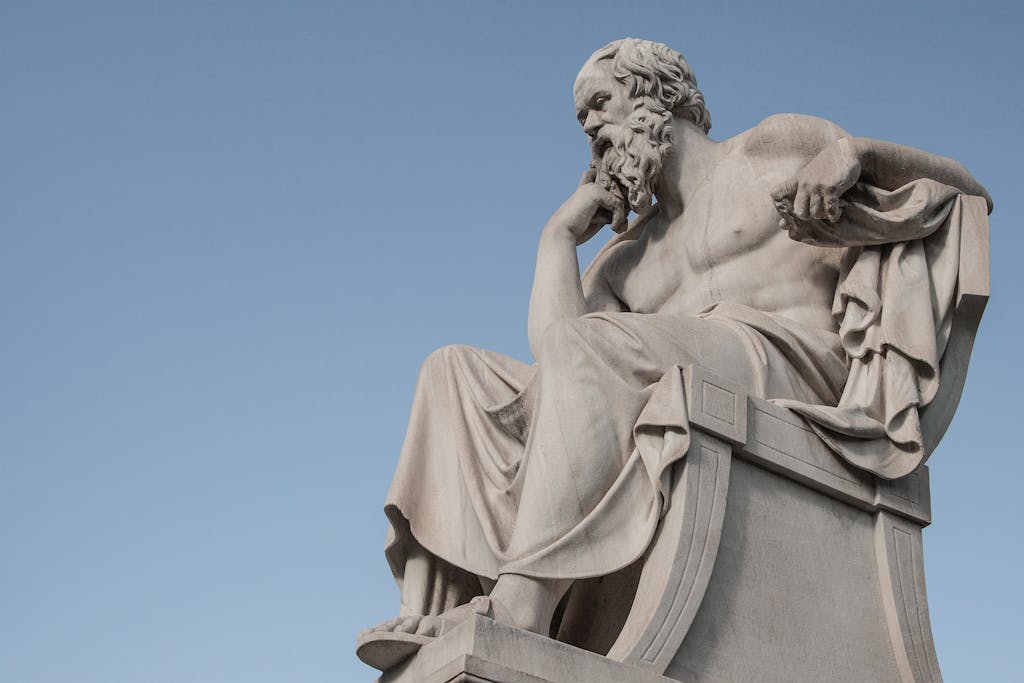
Socrates is a name known to almost everyone, even those who have never formally studied philosophy. We all remember his famous lines like, “The unexamined life is not worth living.” Yet, while his quotes are ubiquitous, many haven’t had the chance to explore the profound weight of the events that led to his execution. In my reflection on his legacy, I’ve found that the death of Socrates was not merely the end of a man; it was a seismic event that marked the true birth of Western philosophy. It was a moment where intellectual integrity collided with the fear of a crumbling society. Today, we explore why this man had to die and why his final moments still resonate so powerfully in our modern world.
The ‘Crucifixion’ of Philosophy: The Hemlock Cup
If the history of Christianity began with the sacrifice of Jesus, the history of Western philosophy began with the hemlock cup forced upon Socrates. He left behind no books and founded no formal institutions. Instead, he left a legacy of provocative inquiry. By urging humanity to “Know thyself,” he shifted the focus of thought from the heavens to the human soul, establishing reason and self-reflection as the ultimate virtues.
Socrates lived in Ancient Athens, celebrated as the world’s first democracy. However, paradoxically, he viewed this system with deep skepticism. He did not hate the idea of the people having a voice; rather, he feared “Mobocracy”—a state where the direction of a civilization is dictated by the whims of an uneducated, irrational crowd rather than by wisdom and virtue. He saw that without a foundation of reason, democracy could easily devolve into the tyranny of the majority.
The Fall of Athens and the Scapegoat

At the time of Socrates’ birth, Athens was at its peak. However, after the devastating defeat in the Peloponnesian War against Sparta, the city-state fell into a spiral of decline. In the chaos that followed, the rational mind of the Athenian public was clouded by bitterness and trauma. Emotional reactionary politics began to override logical discourse, and the citizens began looking for someone to blame for their loss of glory.
In this climate of fear, Socrates became the perfect target. He was eventually brought to trial on two primary charges: impiety against the city’s gods and corrupting the youth. The true source of the public’s anger, however, was his signature technique: The Socratic Method, or ‘Maieutics’ (the midwifing of ideas). He would wander the Agora, claiming he knew nothing, only to lead prominent citizens into contradictions that exposed their own ignorance. In a time of peace, this might have been seen as wisdom; in a time of humiliated pride, it was perceived as an unforgivable insult to the ego
The Trial: “I Deserve a Reward, Not a Punishment”
The trial of Socrates was held before a jury of 500 citizens. In Athenian law, trials were often won by emotional pleas and dramatic rhetoric. Had Socrates played the game—perhaps by weeping or begging for mercy—he likely would have walked away with a minor fine.
But Socrates chose truth over survival. Instead of begging for his life, he stood his ground with intellectual integrity, arguing that he was a gift to the city sent to awaken it from its mental slumber. Most provocatively, he suggested that instead of a death sentence, the city should grant him free meals in the Prytaneum—an honor usually reserved for Olympic champions. This refusal to bow to the “mob” infuriated the jury, leading to a death sentence that Socrates accepted with chilling calm.
The Death of Socrates: Refusing to Escape and Honoring the Truth
While awaiting execution, his friend Crito visited him with a foolproof escape plan. The guards were bribed, and a safe house was ready. But Socrates refused to leave. He argued that he had lived his entire life under the protection of Athenian law, and to break that social contract simply because the law had turned against him would be an act of hypocrisy. He famously stated that one must never return an injustice with another injustice.
To Socrates, his philosophical principles were far more precious than his physical body. If he fled, he would prove his accusers right—that he was a man who feared death more than he loved the truth. By drinking the hemlock, he made his philosophy immortal. For those interested in the historical context of his world, the [Metropolitan Museum of Art’s collection on Greek Art] or the [Stanford Encyclopedia of Philosophy] provide fascinating insights into the era he inhabited.
A Message for the Modern Age: Finding the Soul’s Alarm
Socrates famously said, “It is not merely living that is important, but living well.” This means valuing the process and the virtue of our actions more than the final result. In our modern, success-driven society, have we perhaps become too focused on the destination while losing sight of the journey? While I agree that results are important in a competitive world, I believe we must be careful not to become so consumed by achievement that we abandon our core values. We need to periodically check our own “internal alarm” to ensure we haven’t traded our principles for temporary gains.
Philosophy doesn’t always have to be grand or intimidating. At its heart, it is about asking whether we have a firm set of beliefs and a clearly defined philosophy for our own lives. In a world where we often sway to the noise of the crowd or social media echo chambers, I found myself reflecting on whether my own convictions are truly mine or merely reflections of others’ expectations.
Socrates continues to be the “gadfly” of humanity, stinging us out of our complacency. His death is a testament to how one individual’s commitment to reason can challenge the status quo for over 2,400 years. I hope that through his story, you too can take a moment to step away from the noise of the world and find your own “internal alarm.” Socrates continues to be the “gadfly” of humanity, stinging us out of our complacency and reminding us that a life of reason is a life truly lived.
Recommended: