
Japanese phrases for travel: Magic sentences to make friends (Osaka travel tips)
Writing the final chapter of my Osaka travelogue feels bitter-sweet. Before you head out, what are you preparing besides your itinerary? Is it practicing Japanese phrases for travel, making a list of must-visit restaurants, or packing essential medicines? Personally, I have a specific philosophy whenever I travel. We live in a world where English is universal and translation apps like Papago are incredible, but think about it—when we see a foreigner in Korea trying their best to say “Annyeonghaseyo” or “Gamsahamnida” in broken Korean, we naturally feel more welcoming and want to help them even more. That warmth is universal, no matter where you go.
That’s why lately, I’ve been practicing ‘using as little English as possible’ or ‘learning basic Japanese for tourists‘ before my trips. Even if I can’t make a lifelong friend, I want to at least be able to order a beer on my own. Even if my skills are clumsy and the other person smiles and replies in English, the moment you reach out in their language, a special bond and deep memories are formed that can only be felt in that place. Since this Osaka trip was planned so last minute, I didn’t have much time to study, but thanks to two “magic sentences” I brought like a cheat sheet, I not only gained a heart full of unforgettable memories but also a huge surge of affection for the people of Osaka. Today, I want to share my Osaka travel tips with you.
Ordering a Local Recommended Menu with Japanese Phrases for Travel: “Give me anything random”
The first magic sentence worked wonders at ‘Iebito Sakaba,’ an Okinawan-style Izakaya located in the Hankyu Higashi-dori shopping district. Since they had so many items on the menu, after ordering one popular dish from Google reviews and one we personally wanted, I really wanted to try ‘something truly delicious’ that only the staff knew about. Usually, when we look at a menu, we tend to order things we are already familiar with. So, I gathered my courage and tried some practical basic Japanese for tourists. It might be a bit long for a basic phrase, but hey! If you try hard, you can do it! You can even just read it off your phone!
“Nanikawa iwanaide, anata ga sukina mono o randamu de hitotsu kudasai.” (何(なに)かは言(い)わない으로, あなたが好(す)きなものをランダムで一(ひと)つください。) [Meaning: Don’t tell me what it is, just give me one of your favorite things at random.]
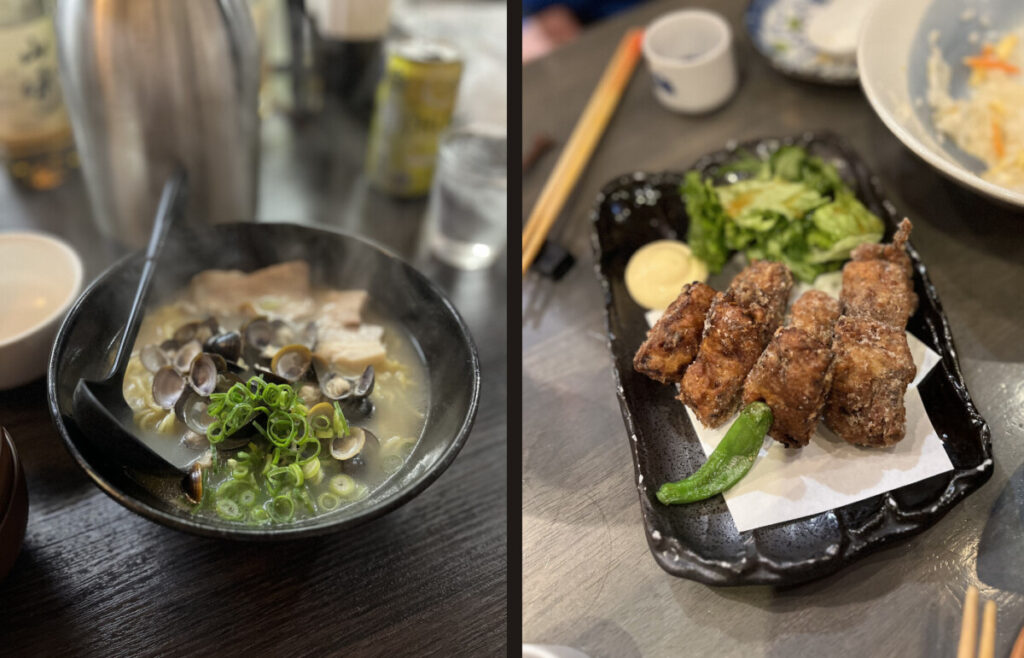
At first, the staff member looked confused and started thinking hard. But as we shouted “Secret, Secret!” with sparkling eyes, they gave us a big grin and brought out a dish. It was ‘Pork Cartilage Karaage’! Usually, chicken karaage is the standard, so pork cartilage was very unique. The moment I tasted it—the unique texture, the crispy batter, and the perfect seasoning—it was undeniably the best dish I had at that restaurant.
The staff seemed to enjoy the unique interaction as well, creating a strange sense of bond. Later, when we happened to pass each other on the street, we waved and greeted each other like old friends. Since that first experience was so successful, I asked the staff everywhere I went after that! “Could you just give us one of your favorite dishes without telling us what it is?” I offer a small apology to the staff who might have struggled with the sudden request, but it was so much fun. The excitement of not knowing what was coming and the trust in a staff recommendation made the experience truly enjoyable. It was a joy I discovered from day one.
Osaka Travel Tips & Dining in Japan: The Class of “Gochisosama-deshita”
Everyone knows “Itadakimasu,” the greeting before a meal. But guys! How long are you going to say the same thing everyone knows? Don’t you want to express your gratitude in a more special way than the average tourist? That’s why I found this magic sentence! It’s the greeting of gratitude to the person who prepared the meal after you’re finished. This phrase captured the chef’s heart instantly:
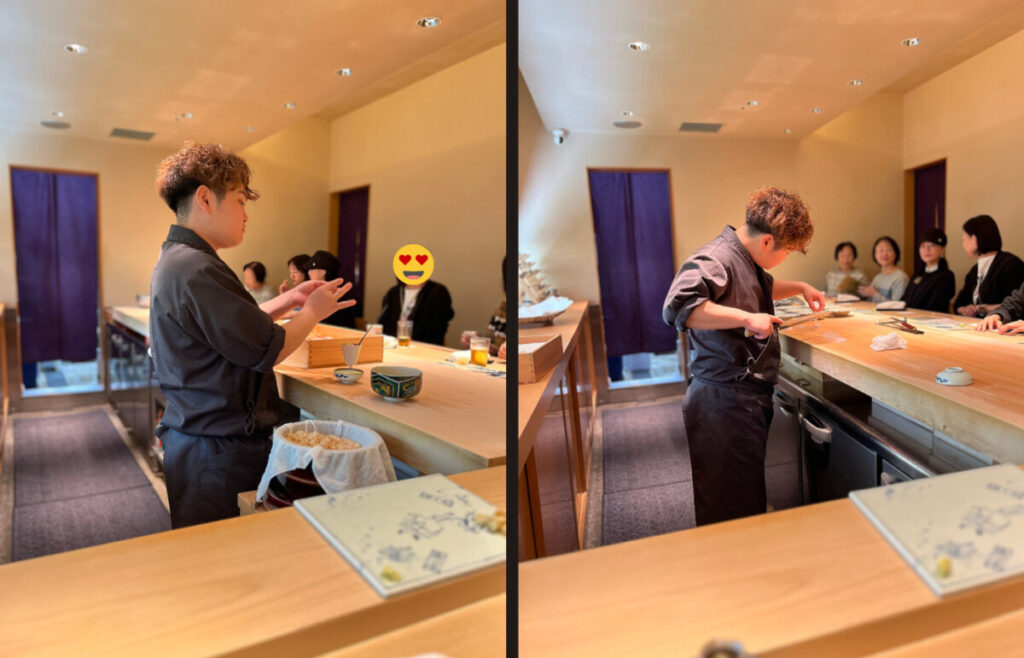
“Gochisosama-deshita” (御馳走(ごち소)様(사마)でした) [Meaning: I have eaten very well / Thank you for the wonderful meal]
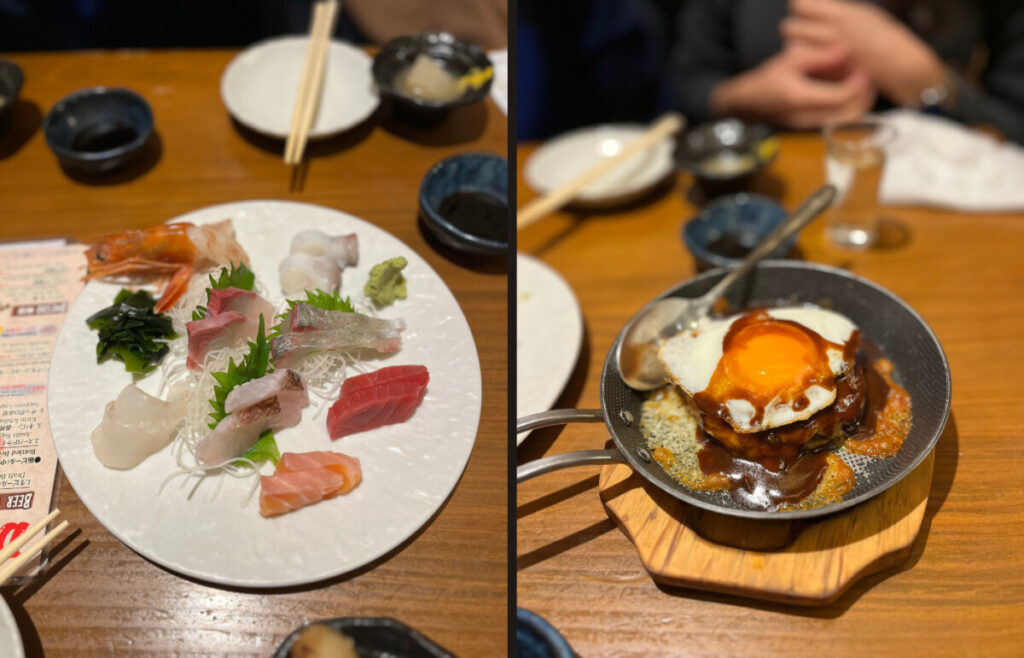
This greeting is considered much more polite and sincere than the shorter versions tourists often use, and it’s the highest praise for a chef. At the Sushi Omakase restaurant we visited, my sister and I stood side-by-side, bowed deeply, and said this to the chef. The look of touched emotion on the faces of the chef and staff was unmistakable. Even the Japanese customers sitting next to us burst out laughing and gave us very friendly looks. We used this greeting at every restaurant we truly enjoyed. At ‘Shamo Jiro,’ the Yakitori spot I mentioned as a ‘life-changing’ place, this one sentence led to small talk and a feeling of human connection. “Oh, you’re Korean? I was so jealous because your skin looks so good!”—it felt just like a reunion with old school friends!
The Clumsy Charm of “Nandeska?” and “Dokeska?”: Essential Osaka Travel Tips
Lastly, a very useful Osaka travel tip is using “Nandeska? (What is it?)” and “Dokeska? (Where is it?)”. Even if you can’t form a perfect sentence, if you just put these after the object you’re curious about, people usually understand. Japanese people are famous for their kindness, so if you successfully ask for directions—even with poor English—they will usually take responsibility and help you find the way. I always approached people with “Sumimasen~ [Place Name] ga Dokeska?” to ask for help.
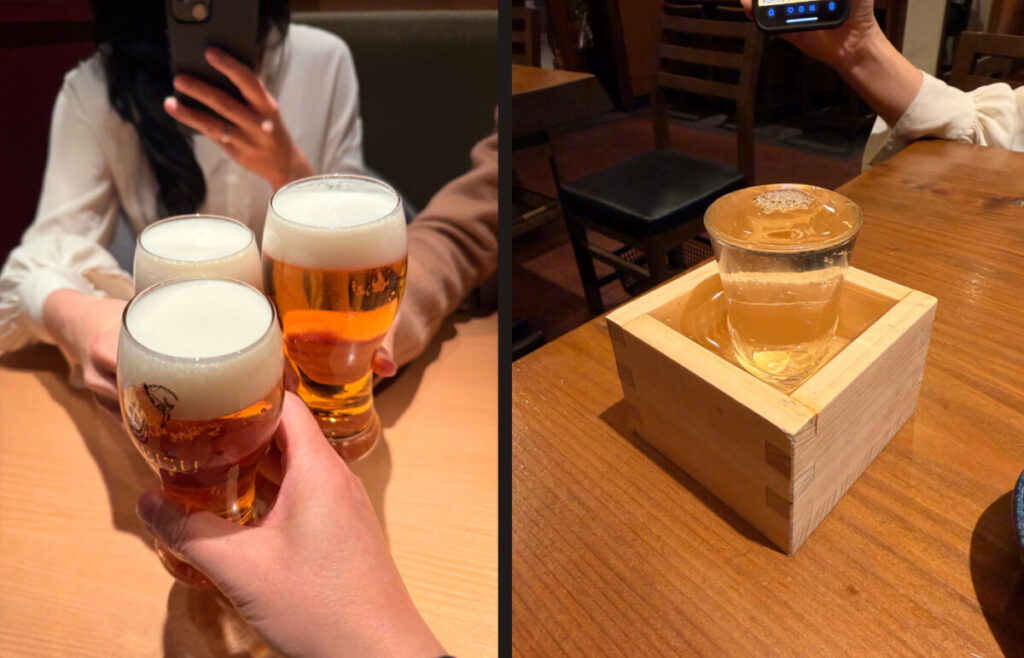
Once, at an Yebisu beer house, the Wi-Fi wasn’t working, so I confidently shouted to the waiter, “Wi-Fi Nandeska? Dokeska?” Actually, I wanted to ask, “What is the Wi-Fi password? Where is the router?” but only those short words came out of my mouth. The waiter burst out laughing and helped me while finding me incredibly ‘cute.’ Receiving ‘cuteness’ at my age was such an exciting experience! Even though it was “Konglish-style” Japanese, my heart was 100% communicated.
What about you? Through this trip, I realized once again that sincerity is more important than linguistic perfection. Just prepare one or two Japanese phrases for travel that are a bit unusual but interesting. You’ll succeed in dining in Japan, enjoy local recommended menus, and your trip will be filled with much warmer and deeper colors.
My Osaka travelogue ends here, but I’ve shared these tips hoping that you will have your own special and joyful Osaka adventure. I highly recommend trying the experience of becoming friends with locals through just one clumsy sentence! Have you memorized the magic phrases? Then why not head confidently to the Nakazakicho Cafe Street? Don’t forget to read my previous post, [Nakazakicho Cafe District: Finding Serenity in Osaka’s Timeless Alleys].