
The Jeffrey Epstein Files, Fort Knox, and the New Era of Bitcoin: Is the Financial System Crumbling?
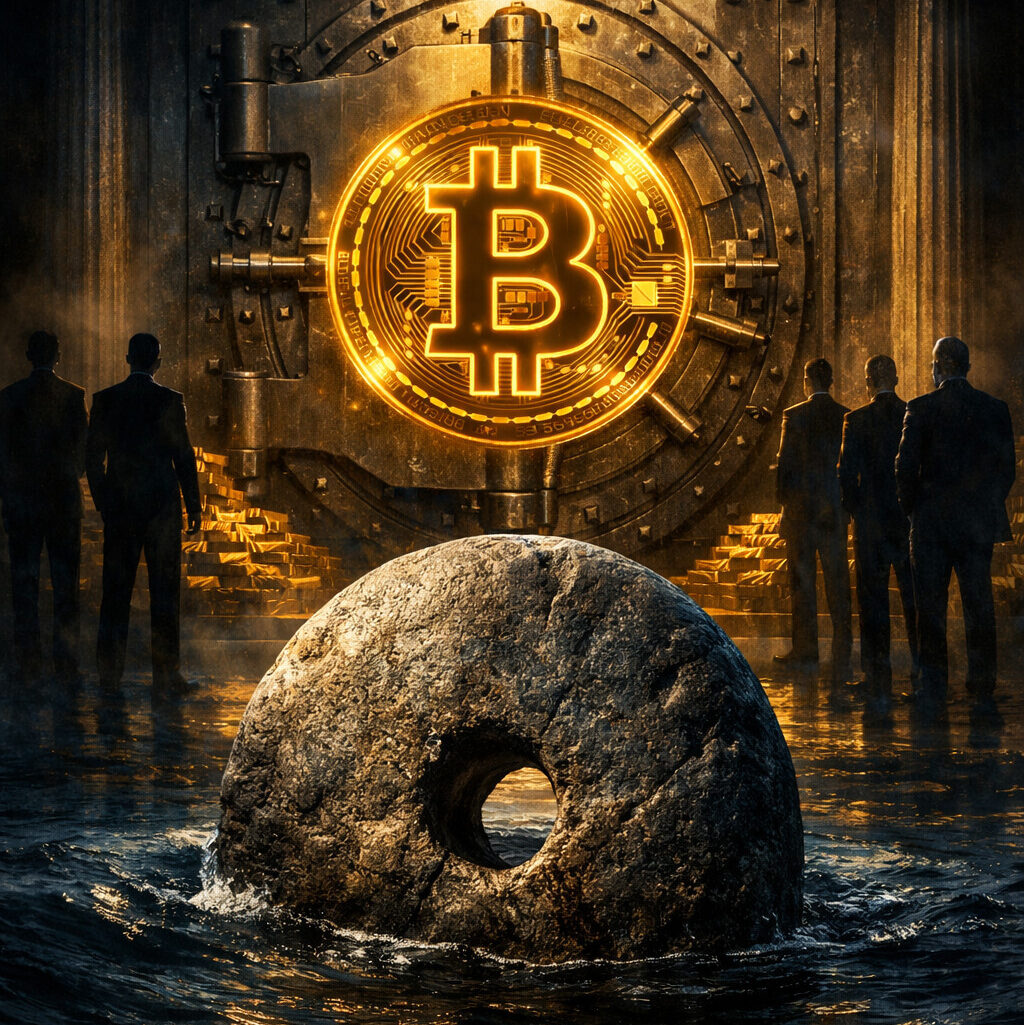
The recent release of over 3 million pages of the Jeffrey Epstein files by the U.S. Department of Justice has sent shockwaves far beyond the realm of tabloid gossip. While the media often focuses on the high-profile names involved, there is a much deeper, more unsettling narrative beneath the surface—one that links global power structures, the “hollow” vaults of Fort Knox, and the strategic rise of Bitcoin. As we peel back the layers, we must ask: Is our global financial system built on solid ground, or is it a house of cards held together by secrets?
The Jeffrey Epstein Files: More Than Just a Scandal
When the files dropped in early 2026, the public expected a list of names. What they got was a look into a complex web of influence. Among the records were shocking allegations regarding funding for core Bitcoin developers and early investments in major crypto exchanges linked to Epstein’s network.
This raises a chilling question: Was Bitcoin, the ultimate symbol of decentralization, actually monitored or even nurtured by the very “Deep State” entities it was meant to bypass? Some argue that Epstein acted as a “honey pot” or an intelligence asset, collecting leverage on the world’s elite to ensure they remained subservient to a specific agenda. If the birth of Bitcoin has fingerprints from such dark corners of power, we have to rethink the “freedom” it promises.
What is Money? Lessons from the Rai Stones
To understand why this matters, we have to look at the essence of money itself. Centuries ago, the people of Yap Island used “Rai stones”—massive limestone discs—as currency. These stones were too heavy to move, so the community simply agreed on who owned which stone. Even if a stone fell into the ocean and was lost to the depths, it still held value as long as everyone agreed it existed.
Our modern banking system is no different. Your bank balance is just a number on a server—a digital Rai stone. We believe in the US Dollar because of a collective agreement. But as we saw on Yap Island, when a dominant power (like the German colonizers in the 1890s) decides to overwrite that agreement, the value vanishes. Today, the “agreement” behind the Dollar is under more pressure than ever before.
The Fort Knox Mystery: Is the Gold Actually There?
For decades, Fort Knox Gold Reserves have been the psychological bedrock of American financial strength. However, the last comprehensive audit of these reserves took place in 1953. In the Epstein documents, leaked emails surfaced claiming that “Fort Knox is empty.”
While this sounds like a plot from a spy movie, it echoes long-standing concerns. In 2011, IMF Chief Dominique Strauss-Kahn was abruptly ousted following sexual assault charges—coincidentally, some rumors suggest, after he discovered evidence that the U.S. gold was missing. Whether or not these Bitcoin conspiracy theories and gold rumors are 100% true, the lack of transparency is undeniable. If the gold is gone or compromised, the U.S. needs a new way to back its global dominance.
Why the U.S. is Quietly Embracing Bitcoin
The shift we are seeing today isn’t the U.S. abandoning the Dollar; it’s the U.S. extending Dollar hegemony into the digital frontier.
- Stablecoin Subjugation: Look at USDT (Tether) and USDC. These tokens power the crypto world, but they are backed by billions in U.S. Treasuries. The crypto market is effectively funding U.S. debt.
- Institutional Capture: Wall Street giants like BlackRock and Fidelity have sucked up massive amounts of Bitcoin through ETFs. They aren’t “joining” the revolution; they are buying the seats at the head of the table.
- Strategic Reserves: By treating Bitcoin as a strategic asset, the U.S. ensures that even if the physical gold is a myth, they own the “Digital Gold” that the rest of the world will eventually have to use.
The Illusion of Decentralization
We were told Bitcoin was unhackable and outside the reach of governments. While the blockchain protocol remains secure, the economic influence over it has become highly centralized. A few “whales” and government-regulated institutions now hold the keys to price action. The revolution has been institutionalized.
This brings us to a difficult realization. In a world where the Jeffrey Epstein files reveal how easily the powerful are manipulated, and where the gold in Fort Knox is a question mark, Bitcoin is the new “Rai stone.” It is a digital consensus that the U.S. is determined to lead.
Choosing the Red Pill
So, should you invest? That is the wrong question. The real question is: Do you understand the game being played?
In the movie The Matrix, Morpheus offers Neo a choice. The blue pill lets you believe whatever you want to believe. The red pill shows you how deep the rabbit hole goes. Understanding that our financial systems—from gold to Bitcoin—are based on “agreements” managed by powerful interests is the ultimate red pill.
The nature of money is changing. It is moving from the physical vault to the digital ledger, but the hands pulling the strings remain the same. To survive this transition, you must move beyond blind faith in any one asset and start thinking like the players at the top. Direct your own path, question the narratives, and remember that in the end, true wealth is the ability to see the truth before everyone else does.
1. Epstein Files & Government Transparency (Official/News)
- U.S. Department of Justice (DOJ) Archive: https://www.justice.gov/
- The Guardian – Jeffrey Epstein Archive: https://www.theguardian.com/us-news/jeffrey-epstein
2. Gold Reserves & Economic Records (Official)
- U.S. Treasury – Status Report of U.S. Government Gold Stock:
- Federal Reserve Board: https://www.federalreserve.gov/
3. The Nature of Money & History (Educational)
- Smithsonian Magazine – Rai Stones of Yap: https://www.smithsonianmag.com/history/the-island-of-stone-money-2541305/
4. Bitcoin & Institutional Data (Tech/Finance)
- The Bitcoin Whitepaper (Bitcoin.org): https://bitcoin.org/bitcoin.pdf
- Glassnode Insights: https://insights.glassnode.com/
If you enjoyed this post, please read [2026 Economic Crisis: Why Your Savings Are Melting Away Like the Fall of Rome] & [The $45 Billion “Fat Finger” Disaster: Why the Financial System is a House of Cards].