
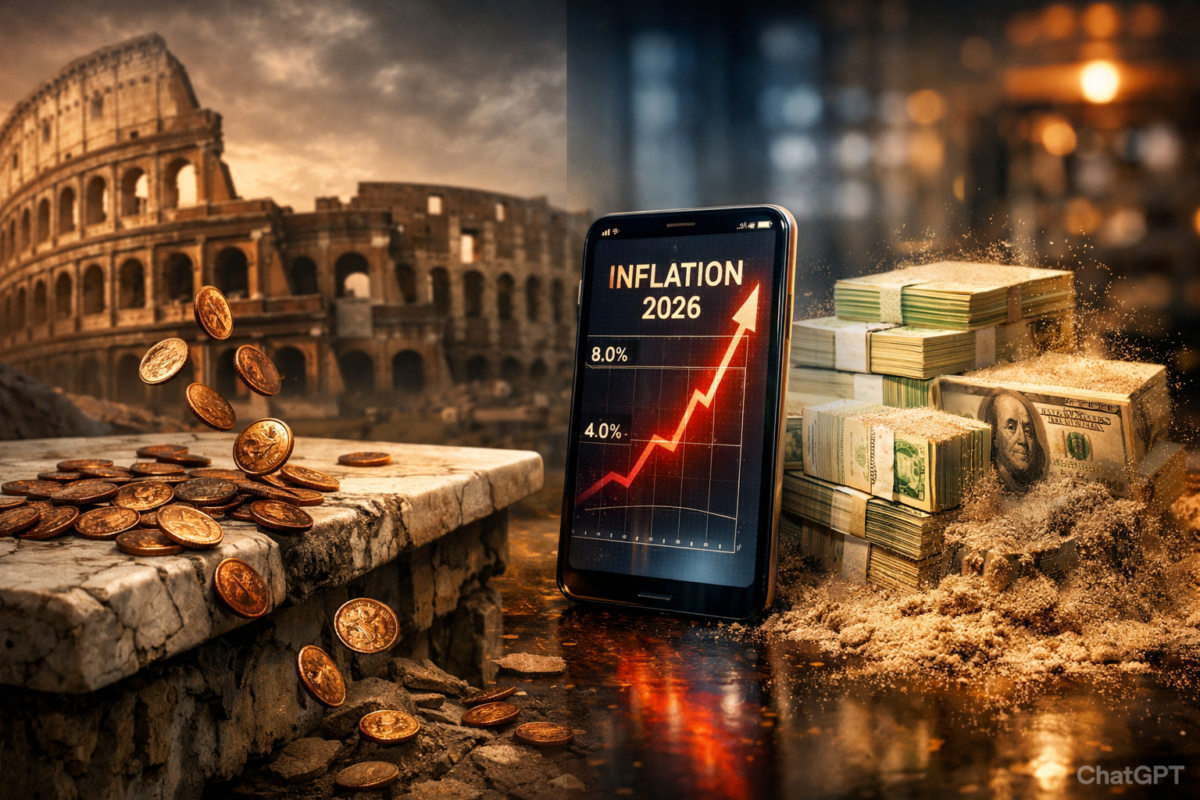
2026 Economic Crisis: Why Your Savings Are Melting Away Like the Fall of Rome
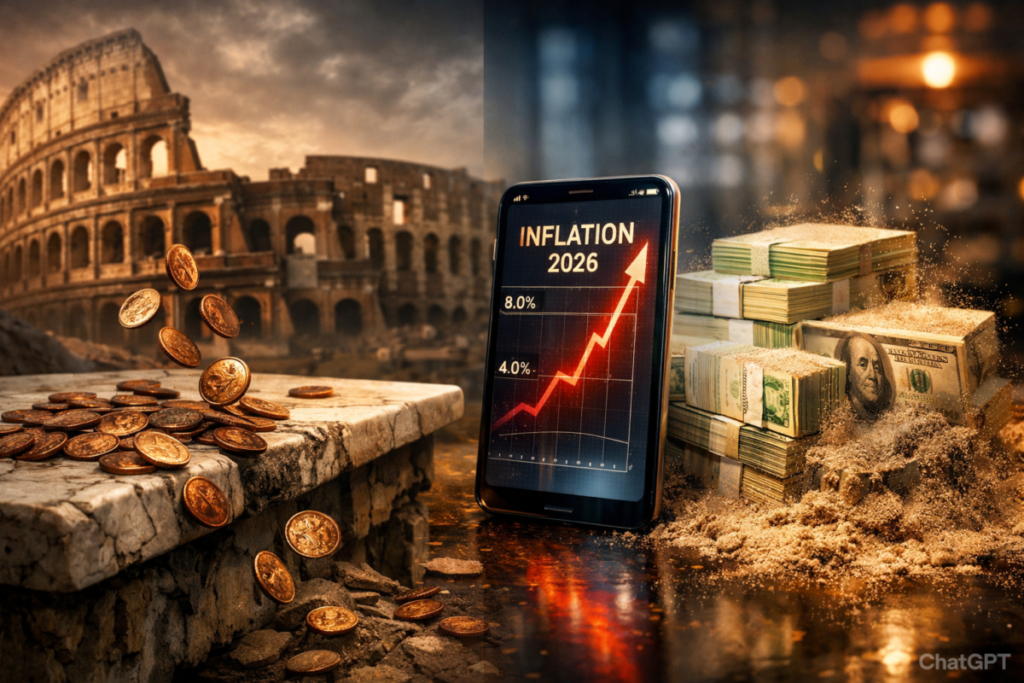
The 2026 economic crisis is no longer a distant headline—it is something we are all feeling at the checkout counter every single month. Living in New York, I’ve always been aware that things are expensive, but this year, the shift became undeniable. I used to be able to do my monthly grocery run for about $300, getting the same organic produce, proteins, and household essentials. Lately, that exact same cart of goods is ringing up at nearly $400 every month.
I was catching up with some friends the other day, and we all realized we were living the same story. Everyone noticed their “staple” items at the supermarket have jumped by 15% to 20% just since the start of the year. The most frustrating part isn’t just the price; it’s the realization that while our monthly grocery bills are skyrocketing, our salaries certainly aren’t keeping pace. We are all working just as hard, yet we feel poorer as the 2026 economic crisis deepens.
Did you take a look at your receipt after lunch today and feel a sudden jolt of sticker shock? In major US metropolitan areas, a “standard” lunch that used to cost $12 is now flirting with the $20 mark. We wake up every morning, check the news, and sigh at how “expensive” everything has become. But the truth is much darker: the problem isn’t that prices are going up. The problem is that the money you worked so hard to earn is becoming trash in real-time.
It’s Not the Price of Apples—It’s the 2026 Economic Crisis of the Dollar
For the past year, we’ve been told that “supply chain issues” are why a bag of apples costs 20% more than it did a few years ago. But flip your perspective for a moment. The apples aren’t becoming more valuable; they are the same apples they’ve always been. It’s the US Dollar in your hand that is losing its shape, melting away like an ice cube left out in the sun.
The numbers on the price tags are getting bigger because the “power” of the currency used to pay those numbers has been castrated. If you don’t look this cold truth in the eye, you will remain trapped on a hamster wheel, working harder and longer only to find yourself sinking deeper into the swamp of “working poverty.” You are being tricked by the magic of numbers while your life’s work is being deleted by the 2026 economic crisis.
The Roman Blueprint: History Repeating Itself
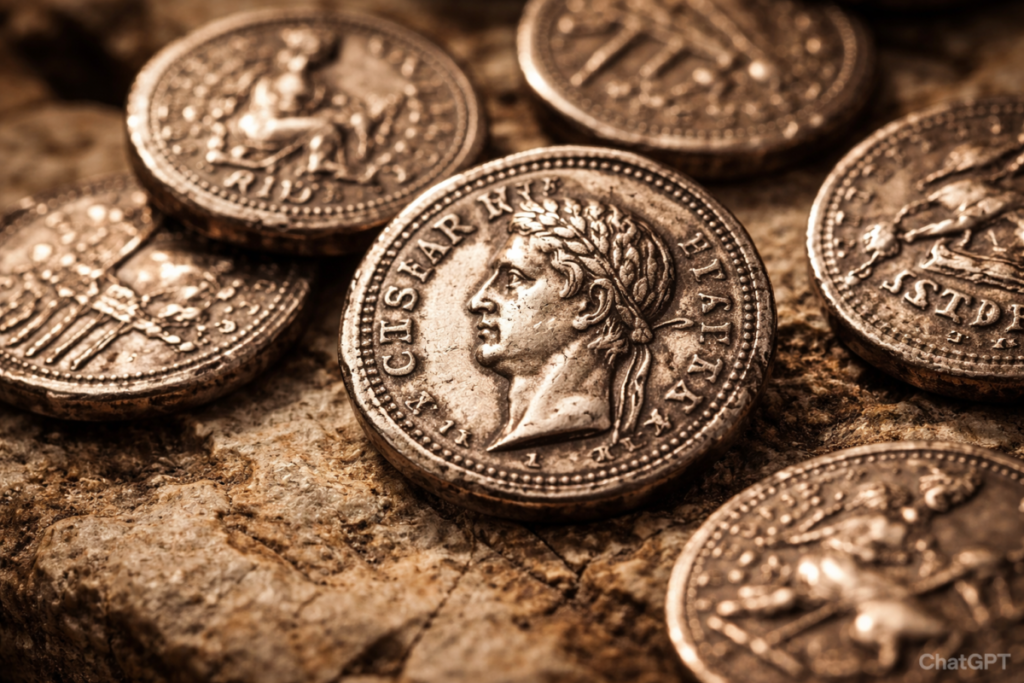
The vague anxiety you feel today isn’t an illusion. You are hearing the cracks in the foundation of a massive system. While history doesn’t repeat itself perfectly, it certainly rhymes. The situation we find ourselves in today is hauntingly similar to the final days of the most powerful empire in history: Rome.
Most people believe Rome fell because of barbarian invasions. However, the Fall of Rome lessons teach us that the real cause of failure wasn’t a foreign army; it was the fake money printed by the state. At its peak under Emperor Augustus, the Denarius was 98% pure silver. By the reign of Gallienus, it contained less than 5% silver. This was a government-sanctioned theft of the citizens’ wealth, a process known as currency debasement.
Modern Money Printing and the Trap of Quantitative Easing
Today, our “emperors” don’t need furnaces and copper. They have the Federal Reserve and computer keyboards. Through Quantitative Easing, they print trillions of dollars out of thin air. By the end of 2025, the US money supply (M2) reached staggering new heights, fueling the 2026 economic crisis we see today.
As the supply of money becomes infinite, the value of the money in your pocket approaches zero. You can track this staggering currency debasement in real-time on platforms like Investing.com, where global inflation data reveals the massive gap between government reports and your actual cost of living. This gap is exactly where your wealth is being stolen.
The “Quiet Quitting” of the Roman Legion and Modern Labor
When money loses its value, the heart of an empire stops beating. The Roman legions eventually refused to fight because they were being paid in worthless copper “trash” coins. They could no longer feed their families on a soldier’s salary.
Today, we see record numbers of “Quiet Quitting” and labor detachment. Is it because people are lazy? No. Just like the Roman legionnaires 2,000 years ago, people have instinctively realized that the game is rigged. Why grind 60 hours a week for a currency that won’t even buy you a starter home? This loss of the “will to achieve” is a classic symptom of a collapsing empire under the weight of a 2026 economic crisis.
The 1% Survival Code: Real Asset Investment
Even as Rome burned, the top 1% didn’t just survive; they thrived by holding real assets. They knew that paper promises are fleeting, but physical reality is permanent. Real asset investment is the only bridge to safety during a currency collapse.
- Productive Land: Farmland that produces food will always have value, regardless of the currency’s name.
- Gold and Silver: Physical metals that have been recognized as “real money” for 5,000 years.
- Scarce Assets: In 2026, this means “Digital Gold” like Bitcoin and prime real estate that cannot be easily inflated away.
The elite understand that inflation is a massive wealth redistribution machine. It steals from the savers and gives to the debtors who own assets. If you are to survive this 2026 economic crisis, you must shift your mindset from “saving paper” to “owning reality.”
Your Exit Strategy for the 2026 Economic Crisis
The state will not save you. In fact, the state requires your currency to lose value to pay off its own massive debts. Relying on the government for your future is like staying on the Titanic because the band is still playing.
If $100,000 fell from the sky today, would you put it in a “safe” bank account and watch it melt? Or would you exchange that failing paper for real asset investment like Gold, Bitcoin, or Real Estate? Your choice today will determine whether your story in the next decade is one of “The Fall” or “The Great Survival.” The 2026 economic crisis is your final warning.
While we fight to protect our wealth in this 2026 economic crisis, a deeper shift is happening: the end of ownership itself. From the homes we live in to the music we listen to, we are moving from “owning” to “accessing.” Why does this transition feel so unsettling, and how does it tie into our financial anxiety? If you want to understand the psychological side of the new economy, check out our deep dive:
[The End of Ownership: Why We No Longer ‘Own’ the Lives We Live]