
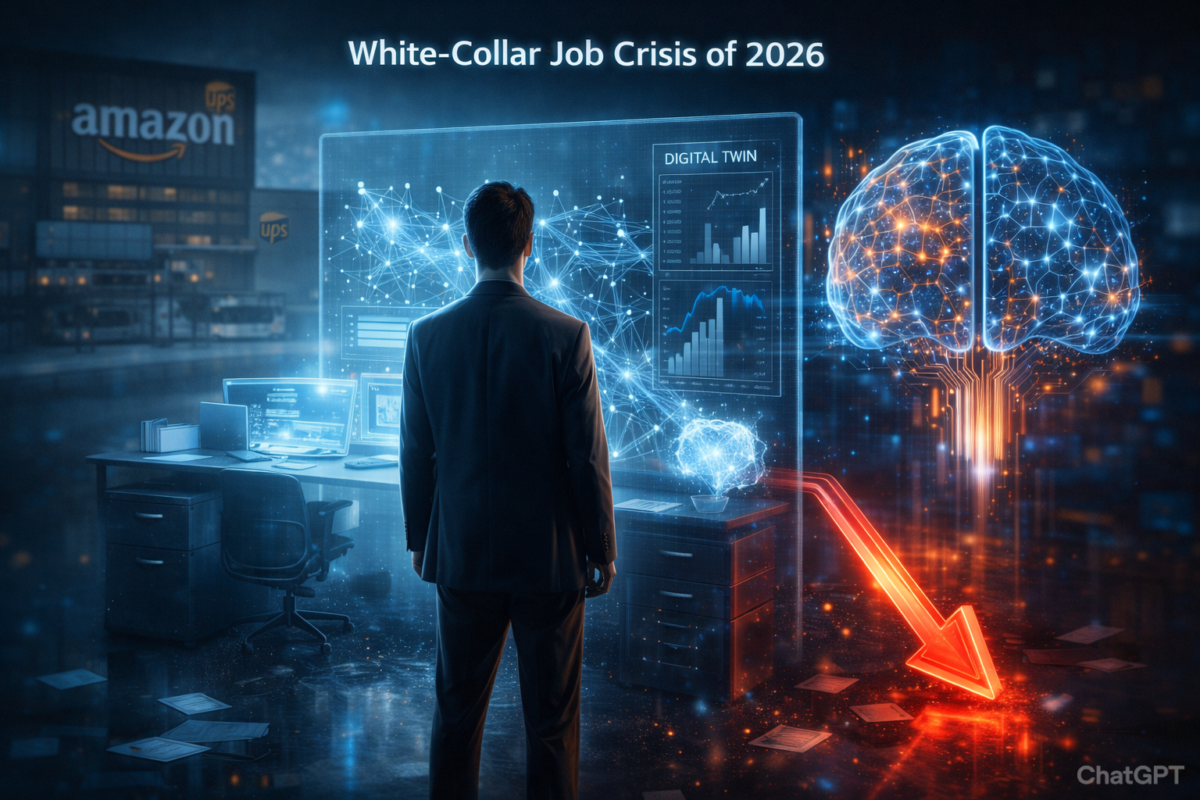
January 2026 Layoffs: Why 100,000 White-Collar Professionals Lost Their Jobs in 30 Days
January 2026 layoffs sent shockwaves through the American labor market with a chilling statistic: 108,000 workers were laid off in a single month. This marks the highest January layoff total since the 2009 financial crisis. But there is a disturbing twist to this story. Unlike previous recessions, these weren’t factory workers or retail clerks.
The “Class of January 2026” consists of corporate executives at Amazon, logistics managers at UPS, hospital administrators, and chemical analysts. The White-Collar class—those of us who spent years earning degrees to secure a desk and a laptop—is being systematically dismantled. If you think your specialized skills are a shield against this tide, you need to look closer at the data. Today, we’re diving into why this is happening, the “AI Washing” phenomenon, and the cold reality of why companies are choosing GPUs over people.
The January 2026 layoffs Bloodbath: A Premeditated Move
According to the latest report from Challenger, Gray & Christmas, the scale of layoffs in January 2026 (108,435 people) is a 118% increase compared to the same month last year. Even more alarming is the month-over-month jump: a staggering 205% increase from December 2025.
What does this tell us? It tells us that while corporate leaders were clinking glasses at holiday parties, they were already sharpening the axe. These weren’t “emergency” cuts; they were premeditated structural shifts designed to launch in the first quarter of the new year.
The UPS-Amazon Breakup: A Lesson in Dependency
The hardest-hit sector was transportation and logistics, largely due to a massive layoff of 30,000 employees at UPS. To understand this, you have to look at the “Amazon Factor.”
For over a decade, Amazon was UPS’s golden goose. But Amazon didn’t just want to be a customer; they wanted to be the competitor. By 2026, Amazon successfully “graduated” from its dependency on third-party carriers, completing its own massive delivery infrastructure. UPS CEO Carol Tomé called their new strategy “Better, Not Bigger,” focusing on high-margin medical and B2B shipping. But the subtext is clear: when your biggest client becomes your biggest rival, your workforce becomes an unaffordable luxury.
The Rise of “AI Washing” vs. Reality
If you scroll through LinkedIn or financial news, you’ll see the term “AI” attached to almost every layoff announcement. However, the data reveals a more complex “AI Washing” trend.
AI Washing occurs when companies use “AI transition” as a trendy cover for traditional cost-cutting or cleaning up over-hiring mistakes from the pandemic era. Wall Street rewards “efficiency” and “automation.” If a CEO says, “We are laying off 10,000 people because of poor management,” the stock price tanks. If they say, “We are streamlining to become an AI-first organization,” the stock price often soars.
According to research from firms like Forrester, while only a small percentage of jobs are being fully replaced by AI today, the fear of AI is being used as a perfect political tool to justify downsizing without the usual PR backlash.
Digital Twins and the End of Monitoring
While “AI Washing” is real, so is AI Reality. Look at the chemical giant Dow. They recently cut 13% of their workforce—about 4,500 people—and explicitly tied it to their “Transform to Outperform” program using Digital Twin technology.
A Digital Twin is a virtual 1:1 replica of a physical factory. Instead of having 4,500 humans monitoring pressures, temperatures, and maintenance schedules across various screens, a single AI system monitors the virtual twin 24/7. It predicts failures before they happen and optimizes output in real-time. Those 4,500 white-collar roles in analysis and monitoring didn’t just go to a cheaper country; they went to a server farm.
The Shift: Buying GPUs Instead of Paying Salaries
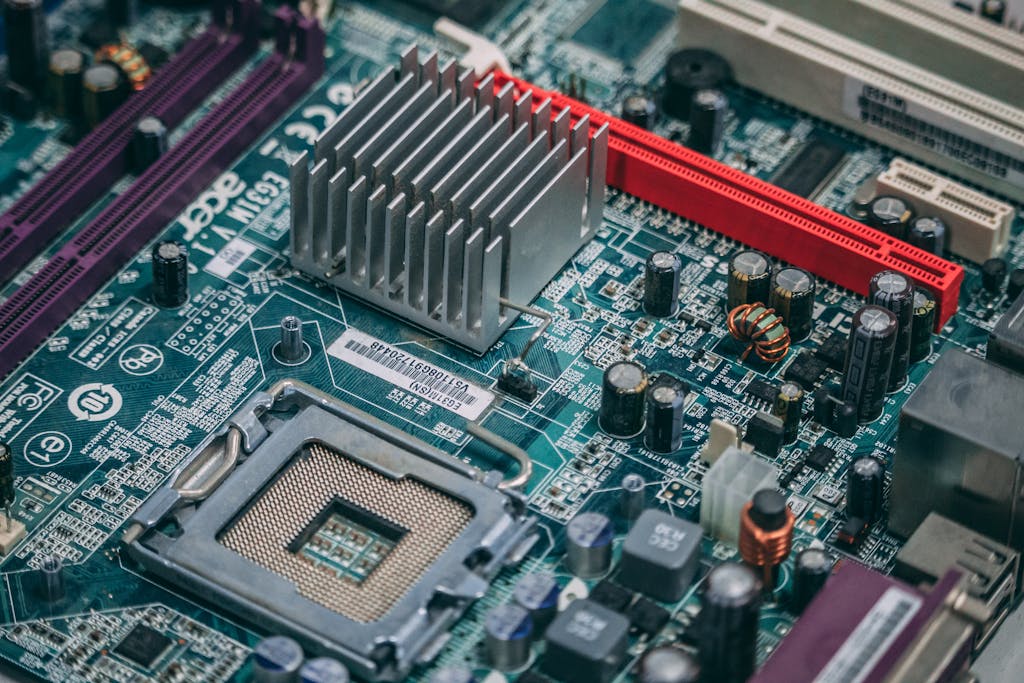
The most telling trend in 2026 is where the money is going. Meta (formerly Facebook) recently cut 1,500 jobs from its Reality Labs division—the very department responsible for the “Metaverse” name change.
Why? Because Mark Zuckerberg is pivoting the company’s massive $30+ billion annual CAPEX toward AI infrastructure. Companies are literally diverting the funds used for employee salaries and benefits into purchasing NVIDIA GPUs and building data centers. We have entered an era where corporate “headcount” is being sacrificed to fund “compute power.”
For a deeper look at how global labor markets are reacting to these technological shifts, you can explore the U.S. Bureau of Labor Statistics (BLS) projections for 2026, which highlight the declining demand for traditional office administrative roles.
Is Any Professional Safe?
It’s easy to think this only affects “low-level” office work, but the 2026 data shows a sharp decline in hiring for accountants, legal researchers, and junior analysts. Even in high-end specialized fields, the entry-level “grunt work” that used to be a rite of passage for young professionals is being handled by Large Language Models (LLMs) and specialized AI agents.
In the US, nearly 60% of Gen Z professionals report high anxiety about their career longevity. The concern isn’t just about losing a job; it’s about the “junior” roles disappearing entirely, leaving no ladder to climb for the next generation of white-collar workers.
From Defense to Offense
The January 2026 layoffs are a loud wake-up call. AI isn’t necessarily coming for your job today, but it has given your employer the perfect excuse to reconsider your “necessity.”
In this environment, being a “reliable office worker” is no longer enough. The survivors of this purge will be those who stop defending their old roles and start taking the offense—learning to manage the AI systems that are currently replacing their peers. The era of the “Paper Pusher” is over; the era of the “AI Orchestrator” has begun.
If you see this story is interested, please read [The End of Academic Pedigree: Why Palantir CEO Alex Karp Says Your Degree is Obsolete].