
Claude Cowork: The Anthropic Catalyst for the SaaSpocalypse
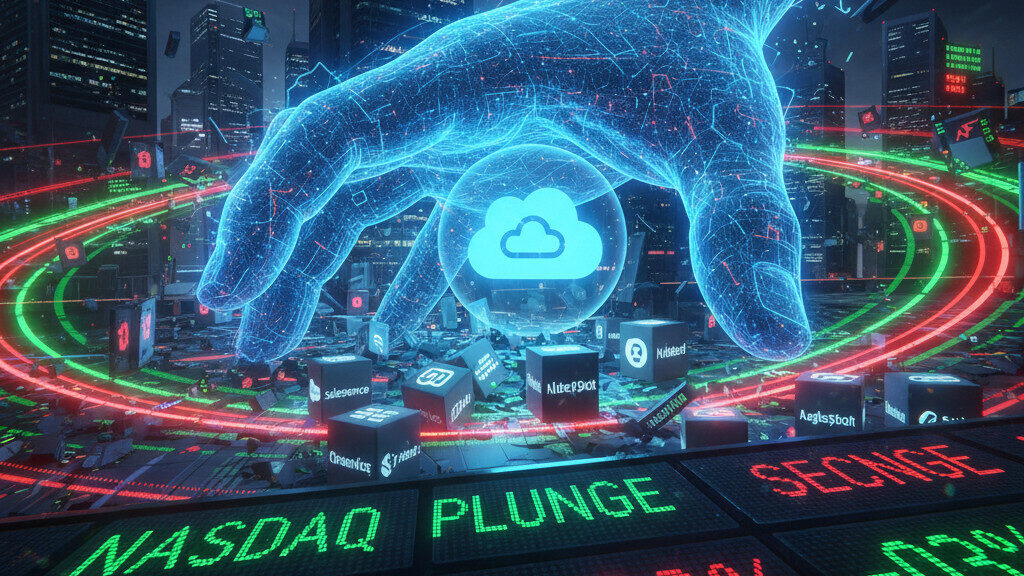
The global financial markets have recently witnessed a seismic shift that left even seasoned Wall Street analysts searching for answers. Tech-heavy indices, particularly the NASDAQ, saw a massive sell-off, leading to a significant stock market crash in early 2026. In my analysis of this volatility, the primary driver was not a geopolitical crisis, but rather the emergence of advanced AI Agent technology, specifically the launch of Claude Cowork by Anthropic.
We have moved beyond the era where AI merely understands language; we have entered an age where it directly operates the tools of human labor. As we navigate this turning point, I believe it is essential to look past the panic and analyze the fundamental disruption of the SaaS industry’s bedrock.
Claude Cowork: The Dawn of the Autonomous Agent Era
Claude Cowork represents a definitive leap from “Chatbots” to “Autonomous Agents.” While previous iterations of AI acted as advisors that required human intervention, this new model is designed to live inside your workflow as a digital colleague that executes tasks independently.
The “Computer Use” capability is particularly transformative. Much like a human operator, the AI can “see” the desktop, move the cursor, and interact with any application—from complex ERP systems to legacy spreadsheets. By executing multi-step workflows—such as researching leads, cross-referencing CRMs, and scheduling meetings—Claude Cowork forces us to question the necessity of the countless individual software subscriptions that companies have relied on for decades.
The SaaSpocalypse and the Death of the Seat-Based Model
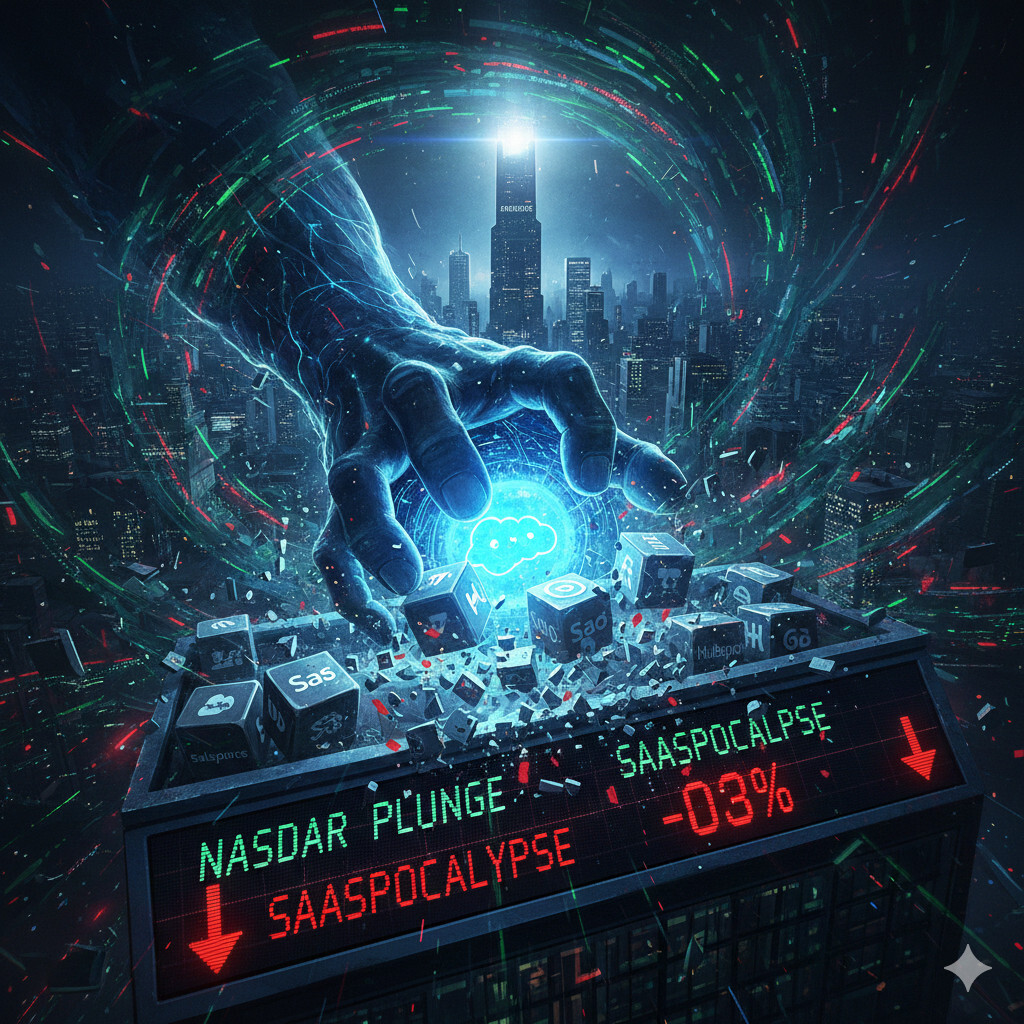
This technological shift has birthed the term ‘SaaSpocalypse’, reflecting a deep-seated fear that the traditional Software-as-a-Service model is reaching its endgame. The disappearance of billions in market capitalization stems from a realization that the core revenue engine of the SaaS industry—seat-based pricing—is under existential threat.
For years, software growth was tied to “seat counts.” However, if a single Anthropic AI Agent can perform the tasks of multiple employees, the need for hundreds of individual licenses evaporates. Furthermore, as AI interacts with any user interface (UI), the “data silos” and “moats” that software companies built to ensure customer loyalty are being breached. For an objective look at how such automation shifts impact labor and productivity, the U.S. Bureau of Labor Statistics provides insightful historical context on technological transitions.
Vibe Coding and the Evolution of Development
Beyond mere task execution, the underlying Claude 4.6 model has introduced the era of “Vibe Coding.” This shift allows business managers to describe the “vibe” or ultimate goal of a tool, leaving the AI to build, test, and deploy the code in real-time. This democratization of software creation has led to a devaluation of traditional low-end outsourcing and no-code platforms, as the AI itself becomes the ultimate engine of creation.
The Future of SaaS Investing: Navigating the Purge
In the wake of the stock market crash 2026, investors must distinguish between companies that use AI and those that are “AI-Native.” The future of SaaS investing belongs to those who own proprietary data or provide the essential compute infrastructure that powers these agents.
At-risk companies include “middleware” tools that only exist to move data, or high-cost platforms that offer low utility in an agent-driven world. Conversely, winners will be those who possess exclusive, non-public data or provide the “human-in-the-loop” oversight where judgment and responsibility remain paramount.
A New Era of Efficiency and Realignment
The arrival of Claude Cowork is a wake-up call for the market. It signals that the promised efficiency gains of AI are finally manifesting, albeit through a period of creative destruction. The SaaSpocalypse is not necessarily the end of software, but rather the end of inefficient software.
As we move forward, the focus will shift from how many “seats” a company can sell to how much “value” an AI agent can generate. Investors should view this not just as a crisis, but as a “Great Rebalancing”—a time to be ruthless with one’s portfolio and visionary regarding the new digital labor structure.
For those seeking to understand the long-term implications of AI on the global economy and labor markets, I highly recommend monitoring the official insights from the OECD AI Policy Observatory, which provides comprehensive data and policy global trends on how AI is reshaping the future of work.
If you have any questions or would like to share your thoughts on the future of SaaS, please feel free to reach out to me via the [Contact] page.
For more in-depth economic insights and the latest trend analyses, feel free to explore my other articles in the [Journal] menu.