
The US Credit Score: The Hidden Obstacle I Didn’t Expect

When I first relocated from Sweden to the United States due to my job, the last thing I expected to become a major obstacle was the US credit score. While searching for my first apartment, a broker suddenly brought up something called a guarantor cost. It was a completely unfamiliar concept, and at first, I didn’t fully understand what it meant.
What I eventually realized was simple but shocking:
In the US, renting an apartment without an established credit history is extremely difficult.
This is because the US financial system is tightly built around the credit score (Credit Score).
Unlike many other countries, having no debt does not automatically mean you are considered financially trustworthy in the United States. What truly matters is not whether you borrow money, but whether you consistently pay borrowed money—or any billed amount—on time, every month, as agreed. Credit in the US is ultimately a system built on trust.
Why Is the US Credit Score So Important?
Your US credit score impacts far more than loans:
- Apartment and housing rental approvals
- Auto loan interest rates and lease terms
- Mortgage interest rates
- Credit card approvals and credit limits
- In some financial roles, background financial checks
In practice, landlords often check your credit score before approving a lease.
How Is the US Credit Score Calculated?
The most widely used credit scoring model in the US is the FICO Score, which ranges from 300 to 850.
FICO Score Components
1. Payment History (35%)
The most important factor. Late or missed payments can stay on your credit report for years.
Reference: usflife.com
2. Credit Utilization (30%)
The percentage of your available credit that you use. Experts typically recommend keeping utilization between 10% and 30%.
3. Length of Credit History (15%)
Older and longer-maintained accounts are better. A credit score usually appears after about 6 months of activity, but to score well in this category, 18–24 months of history is commonly needed.
This factor considers:
- The age of your oldest account
- The average age of all accounts
- Overall account stability
4. Credit Mix (10%)
Having different types of credit—such as credit cards and installment loans—can slightly improve your score.
Reference: Reddit
5. New Credit (10%)
Applying for multiple accounts within a short time leads to hard inquiries, which can temporarily lower your score.
Your credit score is calculated separately by the three major credit bureaus:
- Experian
- Equifax
- TransUnion
Slight score differences between bureaus are normal.
How Long Does It Take to Build Credit in the US?
If you have no credit history, you will not have a score at all.
Most people receive their first reportable credit score after about six months of active credit use. Early scores are often penalized due to short history, which is why many newcomers still see Poor ratings after 10–12 months.
The key early strategy is simple:
Create credit early, then manage it consistently.
US Credit Score Ranges
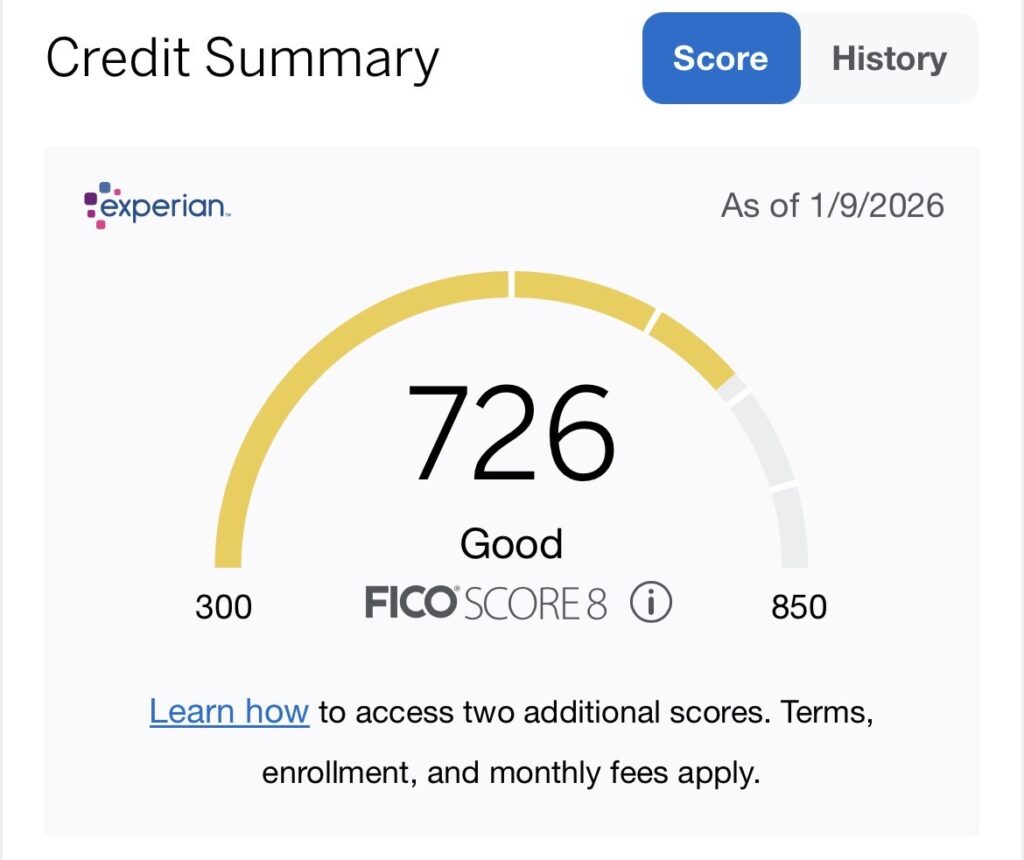
- 300–579: Poor
- 580–669: Fair
- 670–739: Good
- 740–799: Very Good
- 800–850: Excellent
For rentals, better loan terms, and higher limits, a score of 700+ is significantly more competitive.
How to Improve Your US Credit Score
1. Always Pay on Time
Payment history matters most. Even one missed payment can have long-term consequences.
2. Keep Utilization Low
Aim for under 30% of your total available credit.
3. Space Out Credit Card Applications
Applying too frequently hurts your score. Many experts suggest waiting at least six months between applications.
4. Don’t Overdo the Number of Cards
There’s no strict limit.
- Too many cards can reduce average account age
- Too few cards can raise utilization
Many US consumers actively manage 3–5 credit cards.
Reference: Reddit
5. Alternative Credit Data
Some services allow rent and utility payments to count toward your credit profile.
Example: Experian Boost
How to Check Your Credit Score for Free
- Official site: AnnualCreditReport.com – free annual report
- Many banks and credit card apps also provide free score tracking
These checks are soft inquiries and do not affect your score.
What Your US Credit Score Enables
✔ Apartment rental approvals
✔ Auto financing
✔ Higher credit card limits
✔ Lower mortgage interest rates
✔ Access to broader financial opportunities
In the US, renting a home, buying a car, or securing a loan all depend heavily on your credit profile.
Final Thoughts: Credit Is a Long-Term Asset
A US credit score isn’t just a number—it’s a track record of trust.
In competitive rental markets, it can determine:
- Approval or rejection
- Deposit size
- Whether a guarantor is required
Now that you understand how the US credit system works, the next step is learning what actually happens when you try to rent with little or no credit—and how to prepare for it.
Written by Ordia | Date: 2026-01-15 |