

Would you believe if the eggs you ate in Japan were fake eggs?

Eggs in Japan, specifically the “engineered” versions found in convenience stores, are a masterpiece of food science that often fools even the most discerning foodies.
To be honest, before I learned the truth, I was completely fooled myself. Whenever my wife and I watched YouTube videos featuring Japanese street food or bento boxes, I would always turn to her and say, “Wow, look at those eggs! How can the yolks be so vibrant and perfectly yellow? It’s incredible.” We both assumed it was simply because Japan used exceptionally fresh, high-quality eggs from local farms.
As it turns out, that “perfect” experience is a result of brilliant food engineering. These are “engineered eggs” designed to mimic the exact texture, color, and even the “pop” of a raw yolk while eliminating the risks associated with natural poultry products. If you buy a pre-packaged bento box or a breakfast sandwich in Japan, the creamy, runny yolk you see is often a “processed egg product” (nan-kakouhin). This isn’t because Japan lacks real chickens, but because the logistics of keeping a real soft-boiled egg safe and aesthetically pleasing in a plastic container for 24 hours is a nightmare for food scientists.
The Illusion of Perfection: How Japan Recreates the Ideal Yolk
An engineered egg isn’t just one ingredient; it’s a recipe. To recreate the rich, velvety texture of a yolk that “pops” when poked, manufacturers use a blend of gelatin, thickening agents, starch, and vegetable oils. To ensure it still tastes like an egg, they include a small percentage of actual egg yolk that has been thoroughly pasteurized and dried. Because the natural color fades during this process, they add carotenoids—natural plant-based pigments—to give it that vibrant, deep orange glow that suggests “farm-fresh” quality. Unlike a natural egg, which is a powerhouse of protein and vitamins, these engineered versions are primarily composed of carbohydrates and fats, meant for texture and visual appeal rather than nutritional density. For those interested in global food standards and safety regulations, you can find more detailed information on the World Health Organization (WHO) Food Safety page.
The Science Behind Engineered Eggs: How Texture Outperforms Nature
In the United States and Europe, food safety often means “don’t eat raw eggs.” In Japan, however, eating raw eggs over rice (Tamago Kake Gohan) is a national pastime. This creates a cultural demand for “runny” textures. But in the 1980s and 90s, Japan faced a series of food poisoning outbreaks linked to salmonella in undercooked eggs.
For a convenience store giant shipping millions of meals daily, a single bad egg could be a corporate catastrophe. Real soft-boiled eggs are unstable; they continue to cook if the environment is warm, or they spoil rapidly. Kewpie’s Kimipuchi solved this. Since it is fully pasteurized and stabilized with vegetable gums, it carries zero risk of salmonella. It stays “runny” even after being chilled or reheated in a microwave, which is something a natural egg simply cannot do.
Why Japan Prioritizes Safety and Salmonella Prevention Over “Natural” Ingredients
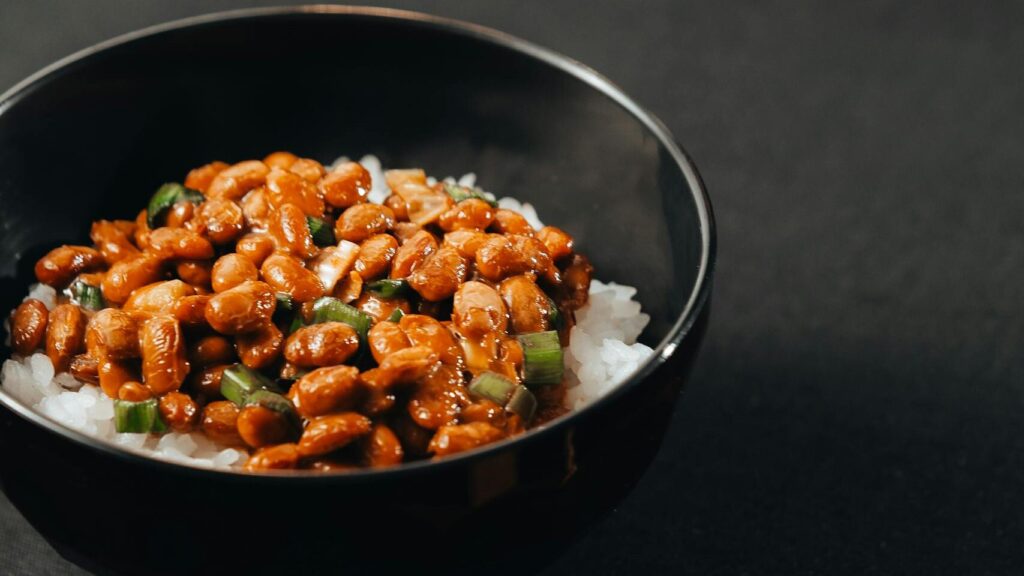
To understand why Japanese consumers don’t mind “engineered” textures, you have to understand the concept of “Neba-Neba.” This refers to slimy or sticky foods like Natto (fermented soybeans) or grated yam. While many Westerners might find these textures “gross” or “slimy,” Japanese culture prizes them for their health benefits and “Nodogoshi”—the sensation of food sliding smoothly down the throat.
Engineered eggs are designed to maximize this “Nodogoshi.” They act as a lubricant for the meal, making a dry sandwich or a bowl of rice feel more luxurious. The food science behind these eggs focuses on the “pop” (Puchi) and the “flow” (Kimi), ensuring that every consumer gets the exact same sensory experience every time.
Embracing the “Neba-Neba” Texture and the Secret of Mouthfeel
If you are a purist looking for the real deal, here is how you can tell the difference while navigating a Japanese grocery store or konbini
If you are a purist looking for the real deal, there are a few ways to tell the difference. First, check the label for the term 卵加工品 (Ran-kakouhin), which translates to “Processed Egg Product.” You can also try the microwave test; if the yolk stays perfectly liquid and bright orange after heating instead of hardening, it’s likely an engineered egg. Lastly, consider the price point—while high-end department stores use premium real eggs, budget-friendly convenience stores are where you’ll most often encounter the Kimipuchi.
The Purist’s Guide: How to Identify Processed Egg Products in the Wild
Calling them “fake eggs” sounds negative, but in reality, they are a testament to Japan’s obsession with quality control and public health. They allow people to enjoy the traditional textures they love without the risk of illness.
While they might not be the protein-packed superfood a natural egg is, they serve a vital purpose in the fast-paced world of modern Japanese dining. Next time you bite into that famous Japanese egg sandwich, appreciate it for what it is: a masterpiece of culinary engineering that bridges the gap between ancient tradition and modern safety.
For various life insight or life style posts, feel free to explore my other articles in the [Life Insights] menu.