
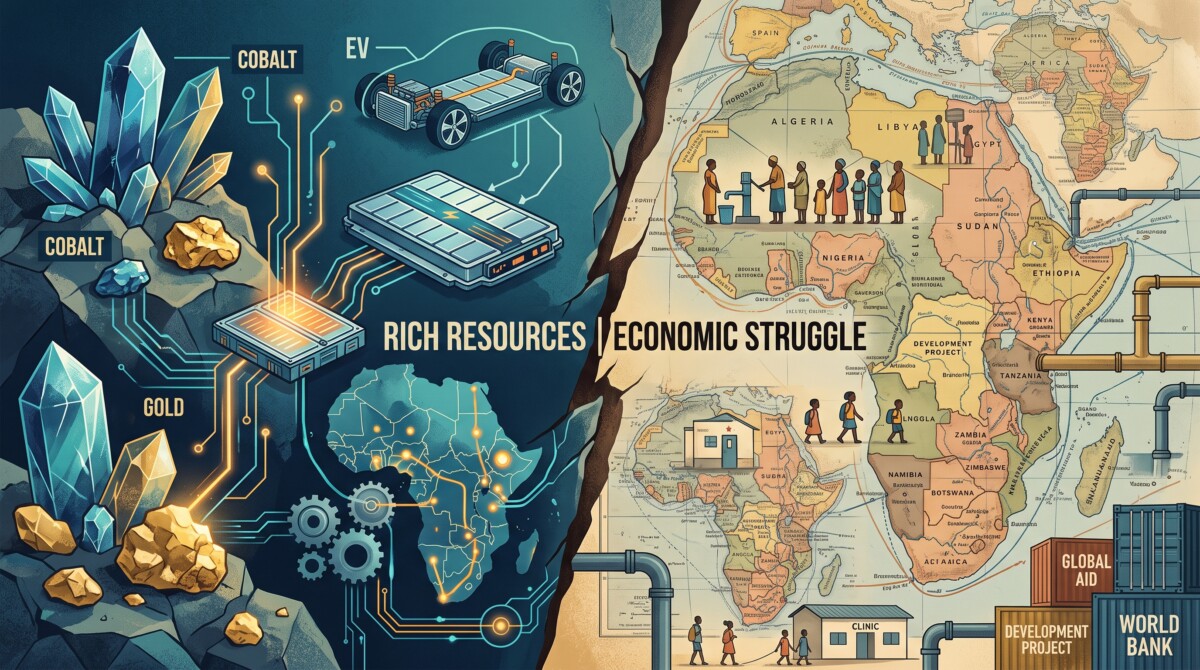
Why is Africa still poor even though it gets so much aid?
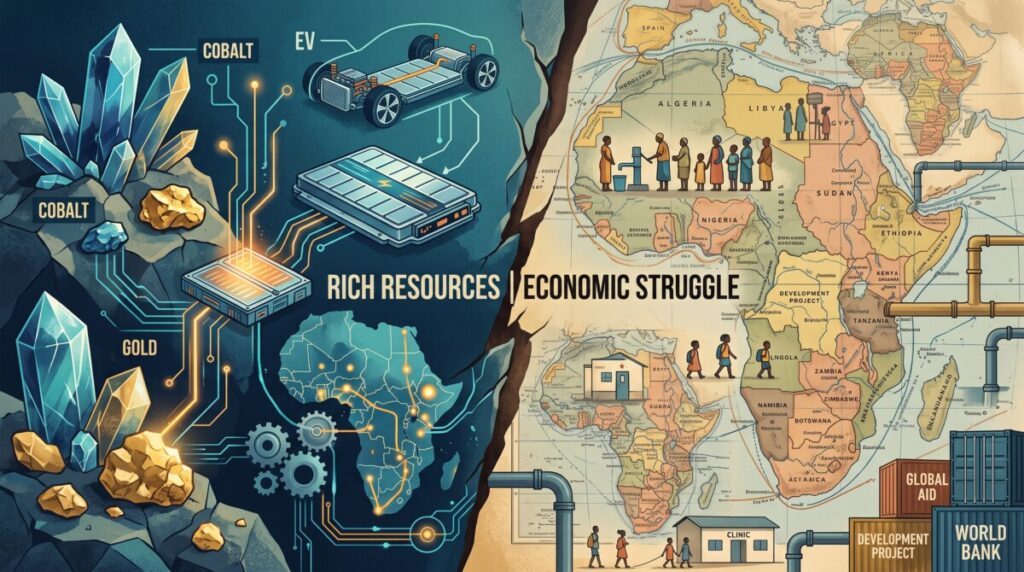
Why Africa is Poor: The Real Reasons 1.2 Trillion Dollars in Aid Haven’t Broken the Resource Curse
When vacation planning rolls around, most people naturally scan destinations like Europe, Japan, Southeast Asia, or national parks across North America. Thanks to travel vloggers, we sometimes catch glimpses of adventurous creators trekking through hidden corners of the African continent. Yet, if you ask the average traveler, Africa rarely lands at the top of their bucket list.
This seems paradoxical at first glance. The continent boasts breathtaking natural landscapes, rich wildlife, and extremely low local travel costs. So why do so many hesitation points exist? Is it merely the long-haul flights or expensive airfare? In reality, the primary deterrent boils down to concerns over safety and political stability. Mainstream news feeds frequently broadcast coverage of regional conflicts, while non-profit charity commercials highlight starving children to urge international donations. Over time, these recurring media images reinforce a singular narrative: Africa is fundamentally dangerous and impoverished.
Initially, these broadcast images evoke genuine empathy and a desire to contribute toward humanitarian aid. Over time, however, a critical question begins to surface: “If global organizations and foreign governments have funneled aid into Africa for decades, why does severe poverty remain so persistent?”
It presents a striking puzzle. Africa is arguably the wealthiest continent on the planet in terms of untapped natural resources. Why, then, does it remain heavily reliant on external aid? What structural mechanics cause trillions of dollars in development funds to dissolve without solving core economic struggles? Let us examine the complex realities behind this dynamic.
Abundant Resources: A Fact Check
To understand the situation clearly, we need to examine the ground facts. The African continent contains vast deposits of essential minerals and raw materials. This wealth is not confined to a single nation; rather, numerous countries across the region possess immense resource reserves.
- South Africa: A leading global producer of precious metals, including gold, diamonds, and platinum. It controls over 70% of global platinum production, a critical component for automotive catalytic converters and industrial applications.
- Democratic Republic of the Congo (DRC): Holds the world’s largest reserves of cobalt, a vital raw material for electric vehicle batteries and modern consumer electronics. More than 60% of global cobalt supply originates here.
- Zimbabwe: Possesses massive lithium deposits, placing it at the center of the clean energy transition.
Despite sitting atop materials that power the global technology sector, many African nations struggle to achieve sustainable economic independence and remain tied to international financial assistance.
Where Did Trillions in Foreign Aid Go?
International organizations like the United Nations and various Western governments initiated large-scale humanitarian assistance with clear objectives: combat epidemics like HIV/AIDS, alleviate chronic food insecurity, and mitigate the human impact of armed conflicts.
Over the past three decades, international aid delivered to Africa has exceeded $1.2 trillion. On an annualized basis, this represents tens of billions of dollars injected into the region every year.
It is worth noting that this $1.2 trillion figure does not reflect purely liquid cash transfers. Direct cash distribution without structural oversight often fails to yield long-term infrastructure. Instead, this figure captures the combined economic value of built infrastructure, water sanitation projects, medical supplies, agricultural equipment, and direct food relief.
Yet despite this massive capital flow, structural poverty endures. The DRC serves as a textbook example of what economists call the “resource curse.” In early 2024, the DRC suspended cobalt exports for four months to stabilize falling global prices caused by market oversupply. Despite holding near-monopoly power over a crucial global commodity, its nominal GDP per capita lingers around $680.
A primary driver behind this disparity is systemic governance failure and political corruption. Revenues generated from mineral extraction rarely reach public infrastructure or educational systems. Instead, profits often concentrate among small political elites and international corporations. In eastern DRC, region-wide instability is compounded by armed groups like the M23, which seize control of mining sites containing gold, copper, and cobalt. These groups smuggle raw minerals across border routes into neighboring regions to fund weapons purchases, prolonging local conflicts.
Hyperinflation and the Decline of Zimbabwe
Another striking illustration of economic instability linked to policy failure occurred in Zimbabwe. During the 1980s, Zimbabwe possessed a thriving agricultural sector and was widely referred to as the “breadbasket of Africa.”
The country’s economic landscape shifted dramatically under the long-standing leadership of Robert Mugabe. The regime implemented aggressive land redistribution policies, seizing commercial farms owned by experienced landholders and reallocating them to citizens with minimal agricultural training or capital equipment. Without technical expertise and supply chains, vast tracts of fertile land went uncultivated, leading to a swift drop in national food production.
As agricultural exports collapsed, government spending continued unchecked. Reports highlighted lavish expenditures on state celebrations while political opposition faced systematic suppression. Facing mounting deficits and dwindling revenues, the central bank began printing currency at unprecedented rates to cover government operations.
This rapid expansion of the money supply triggered extreme hyperinflation. Official estimates placed annual inflation at 231,000,000%, while peak monthly rates reached astronomical heights. Local currency lost all functional purchasing power, forcing citizens to rely on foreign currencies while banknotes were repurposed for everyday items or discarded entirely.
Underlying Causes of Persistent Economic Challenges
The recurring cycle of economic instability and underdevelopment in parts of Africa stems from interconnected structural factors:
- Over-reliance on Single Commodities: Economies heavily focused on a single export—such as Nigeria with crude oil—remain highly vulnerable to global commodity price swings. When oil prices drop, state budgets contract sharply. This focus on extraction discourages investment in manufacturing, technology, and service sectors.
- Colonial Border Legacy: Colonial powers constructed territorial borders without regard for existing ethnic, linguistic, or cultural boundaries. These arbitrary lines frequently grouped historical rivals together while dividing cohesive communities, creating long-term administrative challenges post-independence.
- External Political Influence: During and after the Cold War era, foreign powers frequently intervened in local politics to secure access to critical minerals or trade corridors, sometimes backing authoritarian regimes that prioritized foreign alignment over domestic institutional development.
What If Other Nations Had Vast Mineral Wealth?
It is compelling to consider how different national trajectories might look under alternative resource conditions. If nations with strong manufacturing bases today had instead possessed vast oil or cobalt reserves decades ago, their economic structures might have developed very differently.
During the mid-20th century, countries like South Korea focused heavily on export-oriented manufacturing, shipbuilding, semiconductors, and electronics, largely because they lacked natural resource wealth to export. Had vast mineral wealth been present, global market forces might have incentivized those nations to remain primary raw material suppliers rather than developing high-tech manufacturing ecosystems.
Furthermore, cultural traits like workplace discipline and high productivity are often reactions to competitive economic environments rather than inherent traits. Historical accounts from early industrial periods around the world frequently described rural agrarian societies as slow-paced. Productivity scales up when institutions, competition, and economic incentives compel rapid adaptation.
Ultimately, sustainable economic success relies far less on raw resource abundance than on strong governance, institutional transparency, and strategic investments in human capital. Until global aid strategies and local governance focus on building self-sustaining economic infrastructure, the resource curse will remain a formidable challenge for resource-rich nations worldwide.
Why Europe Doesn’t Have Air Conditioning: The Real Story Behind the 104°F Heatwave – Moonists